One Life.
Nelson Mandela
Primeiro presidente negro da África do Sul
19182013
Ofereceram a liberdade a ele. Ele disse não.
8 fontesTranscriçãoLer enquanto ouve
A história em resumo
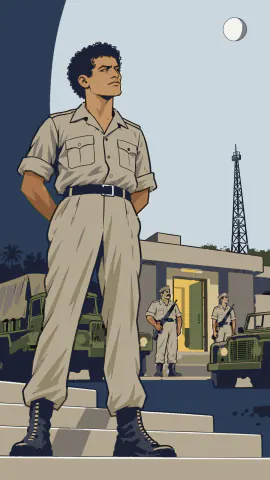
Nelson Mandela foi criado em uma corte real na África do Sul para ser conselheiro de um futuro rei. Fugiu de um casamento arranjado e foi para Joanesburgo, onde se tornou advogado e combateu o apartheid: leis raciais que impediam quase todas as pessoas negras de votar. Liderou protestos pacíficos até que a polícia matou sessenta e nove pessoas em Sharpeville, em 1960, e seu movimento foi proibido. Então liderou o novo grupo armado do movimento, cujas bombas, segundo ele, miravam bens, não pessoas. Preso em 1962, enfrentou a pena de morte em um novo julgamento e, em 1964, foi condenado à prisão perpétua.
Na ilha Robben, quebrou pedras numa pedreira de calcário durante treze anos. Lá fora, o grupo armado continuou lutando, e algumas de suas bombas mataram civis. Em 1985, o governo ofereceu a ele a liberdade se rejeitasse a violência. Ele disse não. Então, sem avisar o próprio lado, abriu conversas secretas para acabar com o apartheid.
Em 1990, depois de vinte e sete anos na prisão, um novo presidente, F. W. de Klerk, o libertou. Em 1994, na primeira eleição aberta a todas as raças, votou pela primeira vez, numa cédula que trazia o próprio rosto, e se tornou presidente. Depois de um único mandato, deixou o cargo. Morreu em casa em 2013. Mesmo assim, tanta gente se lembra dele morrendo na prisão que essa falsa memória leva o seu nome: o efeito Mandela.
Em suas próprias palavras
É um ideal pelo qual espero viver e que espero alcançar. Mas, se for preciso, é um ideal pelo qual estou preparado para morrer.
Só homens livres podem negociar. Prisioneiros não podem firmar contratos.
Nunca fui santo, nem mesmo com base na definição terrena de santo como um pecador que continua tentando.
Traduzido do inglês.
Fontes (8)
- Nelson Mandela, Long Walk to Freedom (1994), and its Robben Island manuscript (Nelson Mandela Foundation)
- Nelson Mandela Foundation, biography, timeline and prison chronology
- South African History Online, Mandela biography and “Sharpeville massacre”
- Mandela’s statement from the dock, Rivonia Trial, Pretoria, 20 April 1964 (UN text)
- Truth and Reconciliation Commission of South Africa, Report (1998)
- Mandela’s reply to P. W. Botha’s offer, read by his daughter Zindzi, Soweto, 10 February 1985 (South African History Online)
- Nelson Mandela, Conversations with Myself (2010), excerpts by AFP in the Mail & Guardian, 10 October 2010
- The Christian Science Monitor, 25 April 1994, on the ballot, and Psychology Today on the Mandela effect
Atualizado em 6 de outubro de 2026.
Transcrição
Transcrição em inglês, como o filme por enquanto.
They offered him his freedom. He said no.
Nelson Mandela had led a secret armed group, and spent 27 years in prison.
Then the country that jailed him made him its president.
Why did he say no?
Raised to advise a king, he ran away at 22 from an arranged marriage.
As a lawyer in Johannesburg, he fought apartheid: race laws that kept nearly all Black people from voting.
He led peaceful protests, until police killed 69 people at Sharpeville, and his movement was banned.
So he led its new armed group. Its bombs, he said, were meant for property, not people.
Caught in disguise, he was jailed. At his next trial, he faced the death penalty, and got life.
On Robben Island, his cell was 3 paces long. For 13 years, he broke rock in a limestone quarry.
The limestone, his surgeon said, burned out his tear glands.
He learned Afrikaans, his jailers' language, to understand his enemy.
Outside, the armed group fought on. Some of its bombs killed civilians.
The government offered him freedom, if he would reject violence.
His answer: "Only free men can negotiate. Your freedom and mine cannot be separated. I will return."
Then, without telling his own side, he opened secret talks to end apartheid.
A new president set him free. At 71, he walked out with his fist raised.
At 75, in the first election open to all races, he voted for the first time in his life. The ballot carried his own face.
Elected president, he invited the prosecutor from his trial to lunch. The man came away calling him saintly.
He could have stayed on. After one term, he stepped down.
He died at home, at 95. Yet so many remember him dying in prison that the false memory bears his name: the Mandela effect.