One Life. No. 004
Don Valentine
Fundador de Sequoia Capital
19322019
El hijo de un camionero apostó por Apple y Nvidia
8 fuentesTranscripciónLeer mientras escuchas
La historia en breve
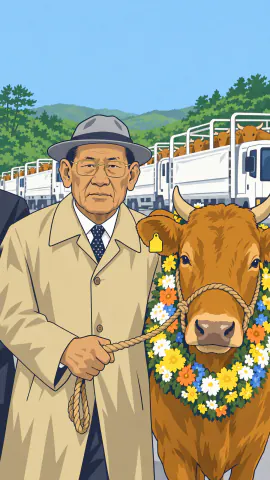
Don Valentine nació en Nueva York en 1932. Su padre manejaba un camión lechero, y ni él ni la madre de Don habían terminado la escuela primaria. El servicio militar lo llevó a California; para 1960 ya vivía allí, vendiendo chips de silicio y aprendiendo a detectar mercados gigantescos. En 1972, una gran empresa de inversiones lo respaldó para fundar lo que llegaría a ser Sequoia Capital, bautizada en honor a las secuoyas más altas.
Apostaba por mercados enormes, no por la apariencia de los fundadores, y a cada fundador le preguntaba: “¿A quién le importa?” Steve Jobs se reunió con él en sandalias y, aun así, en 1978 Valentine le extendió a Apple un cheque de 150.000 dólares (unos 770.000 dólares de 2026). Su equipo vendió esas acciones en 1979, antes de que Apple empezara a cotizar en bolsa. Decenas de inversionistas habían rechazado a Cisco; él la respaldó en 1987. En 1990, después de que los fundadores de Cisco chocaran con el jefe que él había contratado, la junta directiva que él presidía despidió a Sandy Lerner, y Len Bosack renunció. En 1993 su equipo respaldó a Nvidia, la nueva empresa de chips gráficos de Jensen Huang.
A mediados de los años noventa se hizo a un lado; socios más jóvenes que él había contratado tomaron el mando y respaldaron a Google. Cisco, Apple y Google llegaron a ser, cada una, la empresa más valiosa del mundo antes de que Valentine muriera en 2019, a los 87 años. Nvidia hizo lo mismo en 2024. En octubre de 2026, las tres empresas más valiosas del planeta, Nvidia, Apple y Alphabet (Google), eran todas apuestas tempranas de su equipo, con un valor de cerca de una décima parte del mercado bursátil mundial.
En sus propias palabras
…operación muy cara, gerencia cuestionable para esta valoración.
Si pierdes mi dinero, te mato.
No elegimos personas, elegimos mercados.
Traducido del inglés.
Fuentes (8)
- Donald T. Valentine, “Early Bay Area Venture Capitalists”, oral history by Sally Smith Hughes, Bancroft Library, UC Berkeley (2010)
- Team Sequoia, “Remembering Don Valentine”, 25 October 2019, and Sequoia’s company pages
- Erin Griffith, “Don Valentine, Founder of Sequoia Capital, Is Dead at 87”, The New York Times, 25 October 2019
- TIME, “The Seeds of Success”, 15 February 1982; Business Insider on Sequoia’s release of his 1977 Apple memo, 2 April 2026
- Cisco’s heritage timeline (1987–2000); James Pelkey, A History of Computer Communications, §14.21
- Jensen Huang at Stanford Graduate School of Business, View From The Top (2024); NVIDIA, Form S-1/A, 13 January 1999 (SEC)
- Don Valentine at Stanford Graduate School of Business, “Target Big Markets” (2010)
- CNET, Bloomberg and CNBC on each new No. 1 (2000, 2011, 2016, 2024); companiesmarketcap.com, close of 5 October 2026; US CPI-U (BLS), August 2026
Actualizado el 7 de octubre de 2026.
Transcripción
Transcripción en inglés, como la película por ahora.
His team bet on four tiny companies. Each became the world's most valuable company.
Cisco: the internet's plumbing. Apple: our phones. Google: our searches. Nvidia: the chips behind AI. His name was Don Valentine.
He was a milk-truck driver's son, and neither of his parents had finished primary school.
The military sent him to California, and he made it his home, selling a new invention: silicon chips. The valley would be named after them.
Selling chips, he learned how to spot giant markets, and put his own savings into young companies. It worked. In 1972, a big investment company backed him to start what became Sequoia.
He bet on huge markets, not on how founders looked. Every founder faced the same blunt question: "Who cares?" How many people would want this?
Steve Jobs showed up in sandals, and Don called him "a renegade from the human race". But Jobs wanted a computer for everyone, so Don backed Apple.
Dozens of investors had turned down Cisco, whose machines would carry the internet. Don backed it. When the founders later clashed with the boss he'd hired, the board he chaired fired one, and the other quit.
The head of a chip company Don had backed sent him Jensen Huang, 30, with a plan for graphics chips. His team invested, and Don joked: "If you lose my money, I'll kill you."
Then he stepped back, and younger partners he'd hired took over. They backed Google, YouTube and WhatsApp.
Cisco, Apple and Google each became the most valuable company on Earth. Don died in 2019, at 87. Within five years, Nvidia took the top spot too. Jensen hadn't lost the money.
In 2026, the three most valuable companies on Earth, Nvidia, Apple and Google, were all his team's early bets, worth about a tenth of the world's entire stock market.
Not bad for a milk-truck driver's son.